
How to Check Criminal History in Atoka
Atoka does not publish an arrest blotter or a searchable police-record database. The practical Atoka route begins at the town police and municipal court counter, then follows custody and prosecution into Tipton County when needed. Match the custodian to the document: police for the incident or arrest report, the court clerk for a ticket or municipal docket, the county jail for a booking record, and the county clerks for filed criminal cases.
- Identify whether Atoka Police handled the event. Confirm the exact place and agency when an Atoka mailing address is near another jurisdiction.
- Ask Atoka Police for the named incident, arrest report, or permanent daily-record entry with a narrow date and location.
- Call Atoka Municipal Court for a city citation, fine, docket, or failure-to-appear issue.
- Check Tipton County jail and court channels if the event led to custody or a state-law charge.
- Use TBI's Tennessee repository channel only when a statewide name-based history is also needed.
This sequence keeps an Atoka records search at city altitude. County and state systems answer later questions, but they do not replace the first report created by the town.
Atoka Daily Police Records
Atoka's municipal code gives requesters a useful local fact. Section 6-103 requires the police department to keep a comprehensive, detailed daily record in permanent form. The required scope includes known or reported offenses in town, arrests by officers, police investigations, funeral convoys, answered fire calls, miscellaneous department activity, and other records required by law or the governing board.
The official Atoka department directory supplies the town's service routes and starting points.
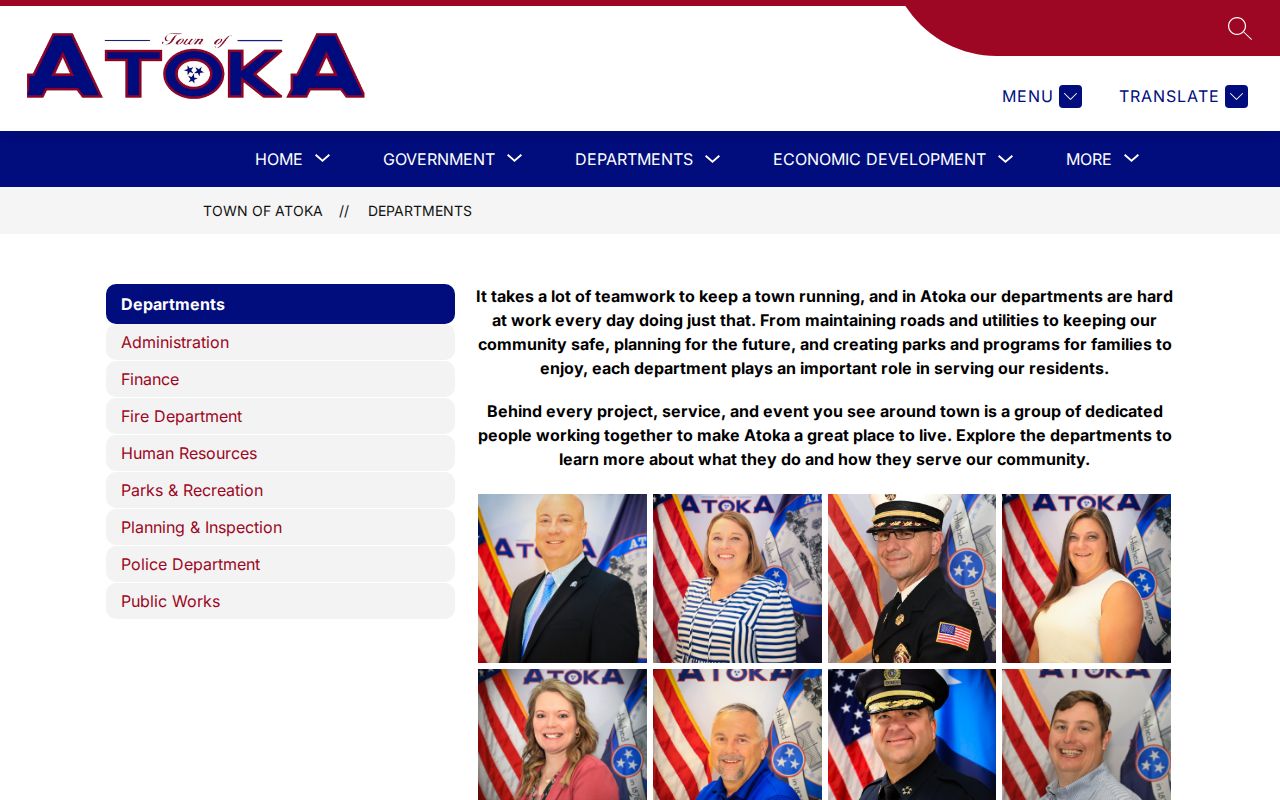
The directory image ties the code duty to an actual custodian. Ask for the releasable entry or report by date, place, event type, and report number when known.
A permanent record is not the same as unrestricted access to each detail. Active investigative facts, protected victims, juveniles, medical data, confidential sources, and personal identifiers may be withheld or redacted under Tennessee law. A tight request helps the town locate the right record and separate public facts from protected content.
The Atoka Police Department
Atoka Police works from the town government campus at 334 Atoka-Munford Avenue, Atoka, TN 38004. The police and municipal court line is (901) 837-5302. The official staff directory identifies Police Chief Anthony Rudolph, Assistant Chief William Kaiser, and Court Clerk Kristen Doty. Police leadership may be reached through apdchief@atokatn.gov, while the shared phone line is the safer starting point for routing a current record question.
Atoka's site lists Police Department, Administration and Investigations, Report a Crime, Submit a Tip, complaint and compliment routes, a Private Property Traffic Crash Report, municipal court, fee information, and an Open Records Request route. Those services are distinct. A tip reports facts for police action. A crash form records an event. An open-records request asks the town to inspect or copy an existing record.
The Atoka Police Department page is the official city source for police contacts and services.
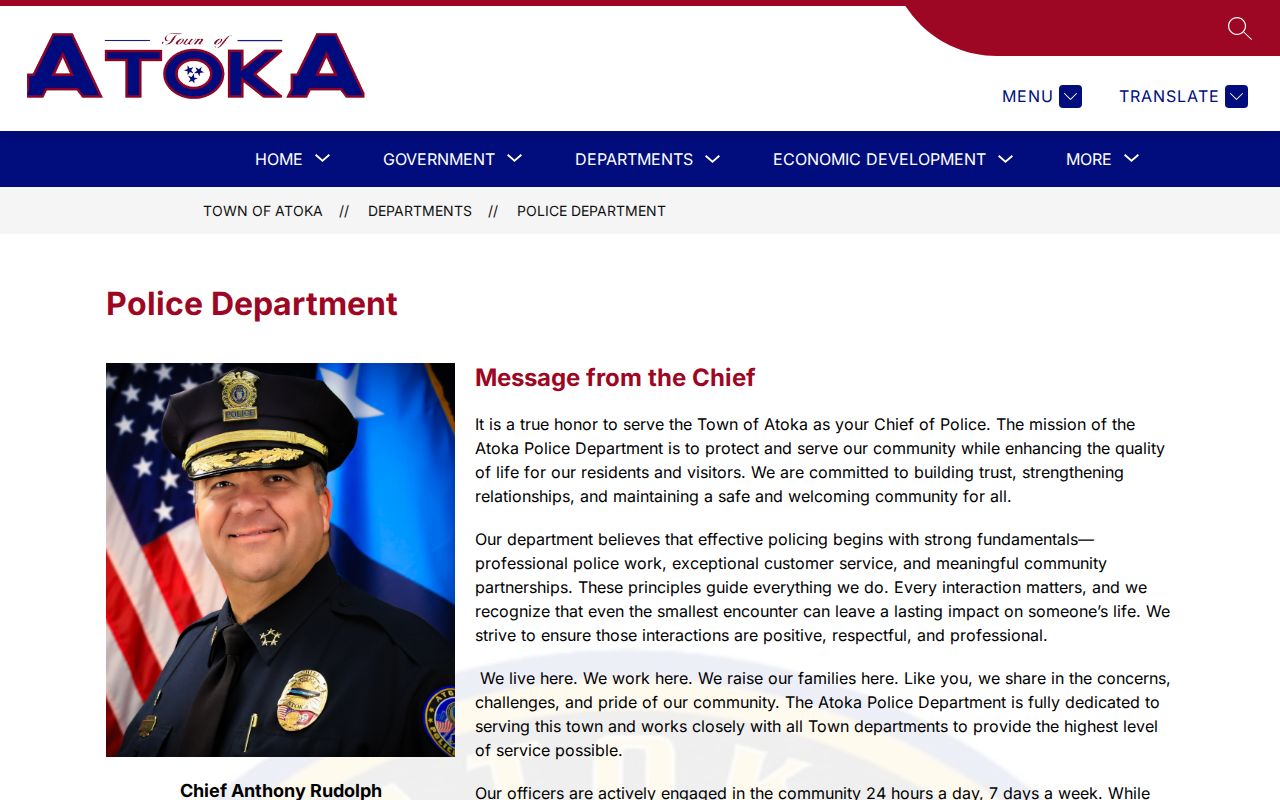
The department page confirms where city-created police records begin. No official Atoka police app was found, so do not rely on an app-only arrest or warrant feature.
Atoka Police Record Request Fields
Atoka advertises an Open Records Request route, although page routing can change. A complete request should still state the key facts in plain text. Include contact information, select Police or Municipal Court as the department when that choice appears, and describe the exact report or daily-record entry. Say whether inspection or a copy is sought and whether certification matters.
| Request Field | Best Entry | Why It Helps |
|---|---|---|
| Requester contact | Current name and reply details | Lets the town clarify or deliver the response |
| Department | Police or Municipal Court | Routes the request to the likely custodian |
| Description | Record type, date, place, and report number | Narrows the search |
| Inspection or copy | State the preferred format | Separates access from duplication |
| Attachment | Citation or report reference if offered | Helps identify the file without excess personal data |
No verified Atoka police copy fee or response-time promise appears in the research. Ask for a cost estimate before labor or copies begin. Do not infer a fee from a payment page meant for court fines.
Arrests and Bookings in Atoka
An Atoka officer creates the city incident and arrest paperwork. If the person is booked into the county jail, the Tipton County Sheriff creates the separate custody record. Research did not confirm a city holding facility or establish that every Atoka arrest follows the same booking route. Call the jail at (901) 475-3300 to confirm present county custody rather than assume.
The city's report may show the arrest basis, officer, date, place, and allegations. A booking sheet can add intake time, booking number, fingerprints, photograph, bond, holds, and release facts. Neither proves guilt. The court file shows the charge that was actually filed and its later result. For a deeper county custody trail, the Tipton County arrest history channel explains the jail, court, and TBI layers.
No Atoka arrest log was found. Ask the city for the report, call the county jail for current custody, and then identify the proper court. A response of “not in custody” does not mean no arrest occurred because release, bond, transfer, or citation may have followed.
Atoka Arrest Record Handoff
The Atoka handoff can split one event among several custodians. Atoka Police retains its own report. The sheriff holds a county booking record when the jail receives the person. Atoka Municipal Court addresses municipal citations and city matters. Tipton General Sessions handles misdemeanors and preliminary felony events, while a felony that proceeds belongs in Circuit Court for the 25th Judicial District.
The Atoka staff directory identifies the police and court officials who share the local service number.
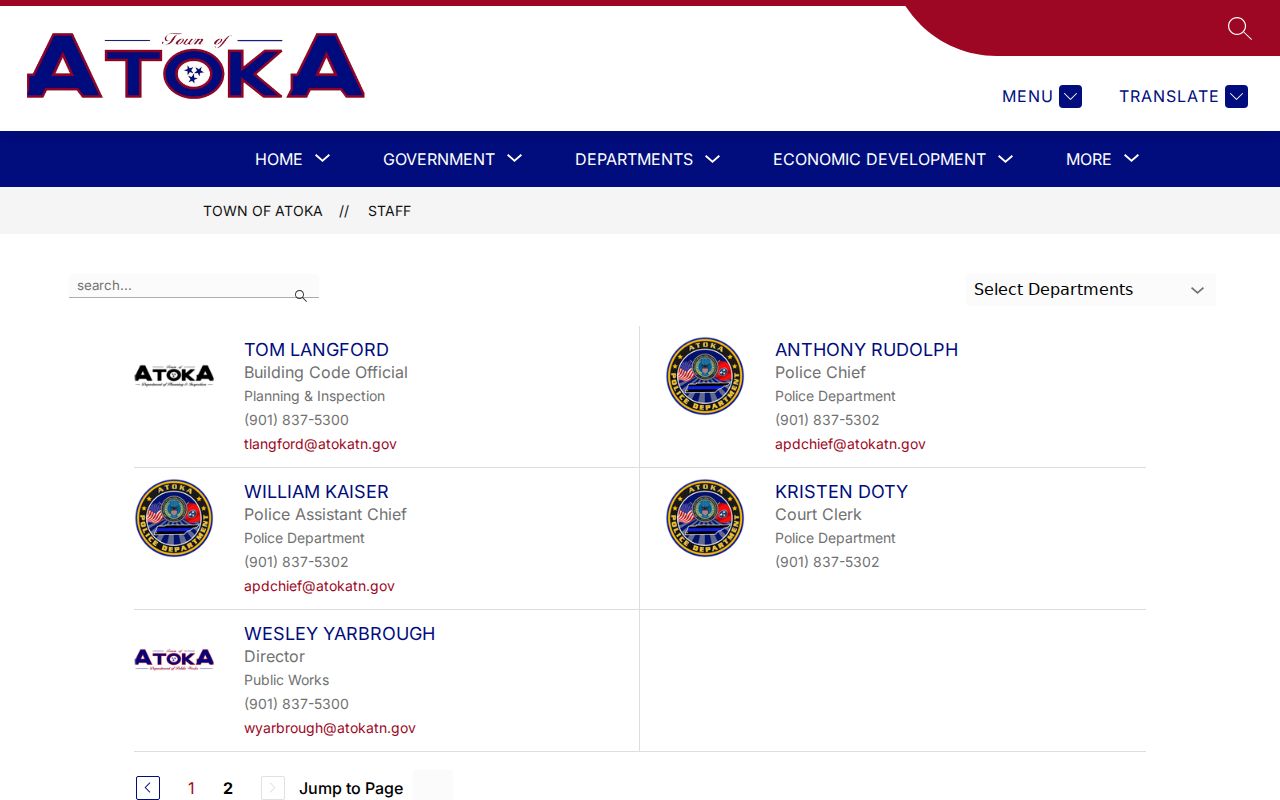
The shared directory helps with the first call, but it does not merge police and court files. State the record type so staff can route the request correctly.
When an Atoka arrest becomes a county case, compare the police allegation with the filed charge and final disposition. A prosecutor may amend or decline a charge. General Sessions may resolve a misdemeanor or conduct a felony preliminary hearing. Circuit Court holds the felony trial-level record after bind-over or indictment.
Atoka Municipal Court Records
Atoka Municipal Court shares the town government campus and the (901) 837-5302 starting line. Its page offers “Pay my Ticket or Court Fine,” but payment is not a criminal-history search. Call the clerk for a city citation, municipal docket, fine balance, or failure-to-appear question. The court does not try Circuit felony cases.
| Court Name | Atoka Municipal Court |
|---|---|
| Location | 334 Atoka-Munford Avenue, Atoka, TN 38004 |
| Phone | (901) 837-5302 |
| Local Scope | Municipal violations, citations, fines, and related local docket records |
| Lookup Channel | Court clerk by phone or counter; no public docket database was found |
| Copies and Fees | Ask the clerk; no verified local record-copy fee was located |
The official Atoka Municipal Court page supplies the court and ticket-payment route.
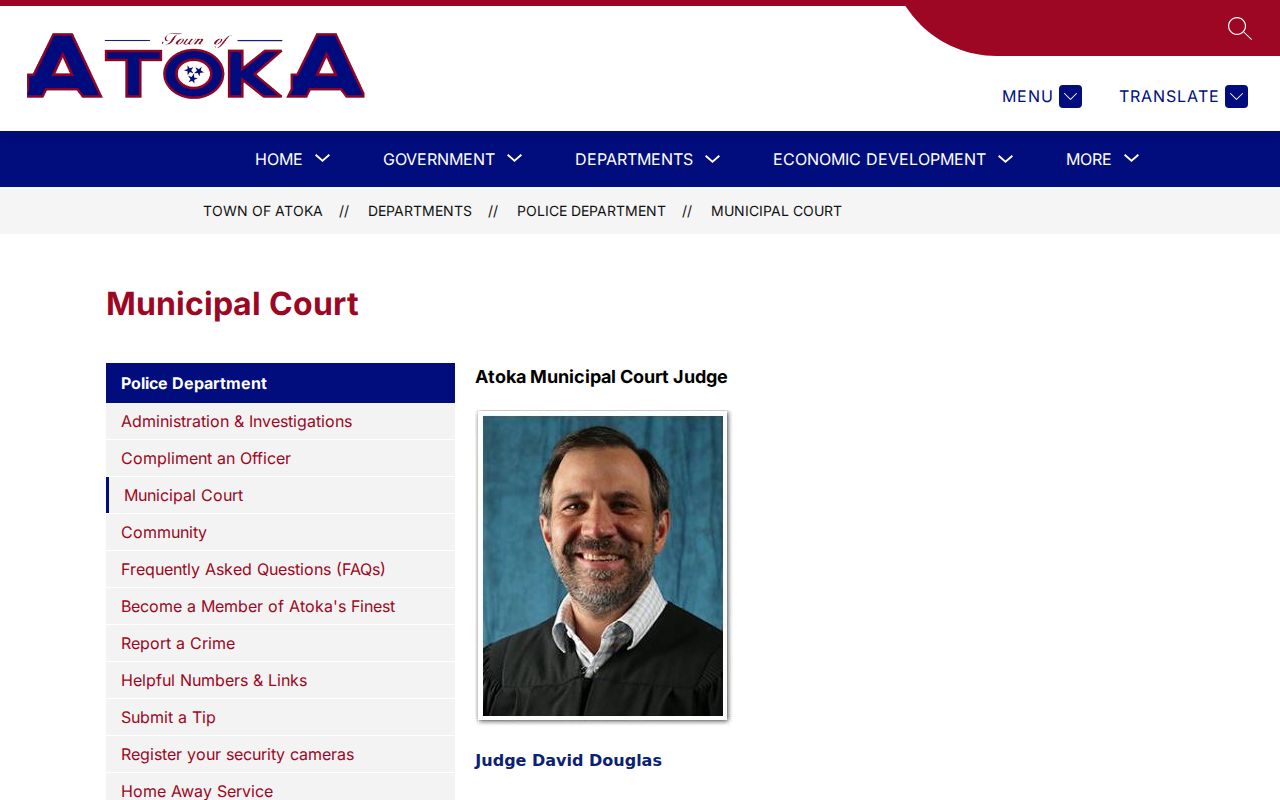
The page is useful for local court business, but its payment link should not be treated as a case-search portal.
Atoka Municipal Citation Limits
An Atoka municipal ticket may remain a town court matter. A state misdemeanor or preliminary felony matter belongs at Tipton General Sessions, and a felony that advances belongs at Circuit Court. This boundary is why the event location alone does not identify the final file custodian.
If a capias or failure-to-appear issue stems from an Atoka citation, ask the municipal clerk whether the process remains in that court and what appearance is required. If a county criminal docket number exists, contact the proper Tipton clerk. Only the issuing court can confirm that its process has been cleared. Keep any receipt or signed order and allow time for connected systems to update.
Do not send funds to an unsolicited caller claiming that a warrant will be cleared. Use the published Atoka court line, identify the citation or case, and ask the clerk to explain the official next step.
Where Atoka Records End Up
Atoka records do not move as one file. The Atoka police report stays with the town. County booking data stays with the sheriff. General Sessions or Circuit Court records the filed charge, docket events, plea or trial result, judgment, and sentence. Fingerprints and reported outcomes can then form part of TBI's Tennessee repository history.
Record flow: Atoka Police Department › Tipton County Courts › Tennessee Bureau of Investigation
Use the city record for the first account of the event. Use the court record for the legal outcome. TORIS adds a Tennessee-only, name-based repository check, but it costs $29, excludes aliases, and is not a fingerprint-confirmed match. It should not replace the local files when the question concerns one Atoka incident.
If the city case moved to a county court, the Tipton County criminal court case record is the source for filed charges and disposition rather than the original arrest theory.
Atoka Criminal Record Boundaries
Atoka was Tipton County's largest incorporated place in the 2020 Census, with 10,008 residents. Its shared Atoka-Munford corridor creates a common records problem: an Atoka mailing address does not always prove that Atoka Police handled an event. City limits, the report header, the officer's agency, or dispatch can settle the issue.
When the jurisdiction is uncertain, call the town at (901) 837-5300 or the police and court line at (901) 837-5302. Provide the exact street, date, and event type. If another department handled it, ask for the agency name rather than filing the same broad request with several offices. Munford Police uses its own records channel, while unincorporated incidents generally point to the Tipton County Sheriff.
A clean jurisdiction check saves time and protects accuracy. It also prevents a “no record” response from being misread as proof that no event occurred.
Atoka Records Without a Blotter
The lack of an online Atoka arrest blotter changes the method, not the existence of local records. Cite the daily-record duty when appropriate, identify the event, and request the releasable record under the Tennessee Public Records Act. For recent custody, make a separate call to the Tipton County jail. For a court result, contact the clerk whose docket received the case.
A narrow request might ask for the incident report and the matching daily police entry for a named date and location. Ask to inspect first if that meets the need, or request an estimate for copies. Atoka may redact exempt facts. If access is denied, ask for the legal basis rather than assuming all parts of the record are closed.
No official Atoka police app, report-search portal, arrest gallery, or public case database was documented. Official counters and request channels therefore remain the reliable path.
Public Access Rules
For Atoka, the Tennessee Public Records Act generally lets Tennessee citizens inspect nonexempt government records during business hours. Atoka police and municipal court records remain subject to confidentiality rules and redaction. Active investigations, juvenile files, protected victim data, medical facts, financial identifiers, and confidential-source information may not be released in full.
Key statutes:
T.C.A. §10-7-503 establishes the Tennessee Public Records Act access rule for Tennessee citizens when no exception applies.
T.C.A. §10-7-504 preserves confidentiality for records and information protected by statute.
T.C.A. §40-32-101 removes qualifying expunged records from ordinary public access through the originating court's process.
Atoka's permanent daily-record rule does not cancel these statewide limits. It does give a requester a clear way to describe the local record. Ask the town to produce the public portion and identify the legal ground for any withheld part.